
Outdoor Table Base Guide
Choosing the right table base for an outdoor setting requires a little more consideration than choosing one for an indoor table. Outdoor bases need to cope with changing weather conditions, moisture, temperature changes and, in some environments, frequent commercial use.
Whether you’re creating a table for a home patio, terrace, garden, café, restaurant or outdoor hospitality area, choosing a suitable base will help ensure your table remains stable, practical and attractive.
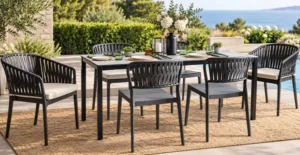
1. Is the Table Base Suitable for Outdoor Use?
The first question to ask is whether the table base has been specifically designed or approved for outdoor use.
Not every metal table base is suitable for being left outside. A finish that performs well indoors may not provide sufficient protection against rain, humidity and other environmental conditions.
Always check the manufacturer’s specifications before using a base outdoors. Look for products described as outdoor suitable, weather resistant or suitable for external use, and check any limitations regarding permanent exposure.
If your table will be outside throughout the year, choose a base designed for the level of exposure it will receive.
2. Consider Weather Exposure
Outdoor furniture can be exposed to considerably more demanding conditions than indoor furniture.
Rain, condensation, humidity, sunlight, frost and temperature fluctuations can all affect a table base over time.
Think about where your table will be positioned:
- Covered patio: Provides some protection from rain and direct sunlight.
- Terrace or partially sheltered area: May still experience significant moisture and wind exposure.
- Fully exposed garden or outdoor seating area: Requires a base and finish designed to withstand direct exposure to the elements.
If the table is only used outside occasionally, storing it under cover when not in use can help extend the life of the base and tabletop.
3. Consider Corrosion Resistance
Corrosion is one of the most important considerations when selecting an outdoor table base.
Moisture can cause unprotected metals to rust or corrode, particularly where the base is repeatedly exposed to rain or damp conditions.
Depending on the product, protection may come from materials such as stainless steel or aluminium, or from protective finishes such as powder coating.
However, not all finishes offer the same level of outdoor protection. Always check the manufacturer’s specification rather than assuming that a particular colour or finish automatically makes a base suitable for outdoor use.
For coastal locations, salt in the air can make corrosion more of a concern. In these environments, selecting a suitably corrosion-resistant product and maintaining it correctly is particularly important.
4. Choose a Stable, Suitable Base Weight
Outdoor tables need to be stable, particularly in exposed locations.
Wind can move lightweight tables or even cause them to tip, depending on the size and design of the tabletop.
A heavier base can provide greater resistance to movement, making it particularly useful for outdoor dining and commercial settings.
When choosing your base, consider:
- Tabletop size
- Tabletop weight
- Base weight
- Base footprint
- Number of bases
- Expected wind exposure
- Whether the table will be moved regularly
For exposed outdoor areas, a substantial pedestal or appropriately weighted base may provide greater stability than a lightweight alternative.
The finished table should also be positioned on a suitable, reasonably level surface.
5. Outdoor Patio and Terrace Tables
For domestic patios and terraces, appearance and practicality are usually equally important.
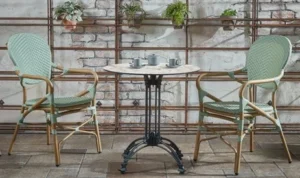
A well-designed outdoor table base can be paired with a wide range of tabletops to create a dining or entertaining area that’s both functional and attractive.
Consider how much protection the table will receive and whether it will be left outside permanently.
For covered patios, a wider choice of materials and finishes may be available. For fully exposed tables, prioritise weather resistance, corrosion protection and stability.
Adjustable feet can also be useful where patio or terrace surfaces are uneven, helping to create a more stable finished table.
6. Outdoor Restaurant and Hospitality Tables
Outdoor restaurant seating presents additional considerations.
Restaurant tables can be used repeatedly throughout the day and may be moved, cleaned and repositioned frequently. The base therefore needs to be durable enough for the environment and practical for staff to handle.
For commercial outdoor seating, consider:
- Frequent daily use
- Stability
- Weight and portability
- Corrosion resistance
- Ease of cleaning
- Floor conditions
- Tabletop weight
- Storage requirements
- Appearance and brand aesthetics
A heavier base can help improve stability in exposed areas, while a more manageable weight may be preferable if staff need to move tables regularly.
For large hospitality projects, it’s worth considering the environment as a whole rather than choosing a base based on appearance alone.
7. Choose a Suitable Tabletop Material
Your tabletop and base need to work together.
Outdoor tabletops can be made from a variety of materials, including timber, compact laminate, porcelain, ceramic, stone and other weather-resistant surfaces.
Consider the weight of the tabletop as well as its resistance to outdoor conditions.
For example, a heavy stone tabletop may require a more substantial base than a lightweight compact tabletop.
You should also consider how the tabletop material responds to moisture, sunlight and temperature changes. A weather-resistant base cannot compensate for a tabletop that isn’t suitable for outdoor use.
Always check that the base’s recommended weight capacity and fixing method are compatible with your chosen tabletop.
8. Think About Maintenance
Even a weather-resistant table base will benefit from regular maintenance.
Outdoor furniture is exposed to dirt, dust, moisture and other contaminants, so keeping the base clean can help maintain its appearance and condition.
As a general rule:
- Clean the base regularly using an appropriate cleaning method recommended by the manufacturer.
- Remove dirt and debris that can retain moisture against the surface.
- Inspect the finish periodically for scratches, chips or signs of corrosion.
- Deal with damage promptly to help prevent further deterioration.
- Keep fixings secure and check them periodically, particularly on commercial furniture.
- Store or cover the table where practical, especially during periods of poor weather.
Avoid harsh cleaning products or abrasive materials unless they are specifically recommended for the finish.
9. Think About the Floor Surface
Outdoor tables can be positioned on a wide range of surfaces, including paving, decking, concrete, stone and other terrace finishes.
The surface can affect the stability of the finished table.
Adjustable feet or levelling systems can be particularly useful on uneven patios and terraces. They can help compensate for small differences in floor level and reduce table movement.
If the table is being used on delicate paving or a finished terrace, consider whether the base’s feet could mark or damage the surface.
10. Consider Wind and Table Placement
Wind is an important consideration that doesn’t usually apply to indoor furniture.
A large tabletop can act like a sail, particularly when the table is lightweight. This can make the overall table more susceptible to movement in exposed locations.
If your table will be positioned in a windy area, consider:
- A heavier base
- A wider footprint
- A suitably weighted pedestal
- The weight and size of the tabletop
- Whether the table can be secured or stored during severe weather
For commercial outdoor areas, consider the local environment and how tables will be managed when the premises are closed.
11. Indoor/Outdoor Table Bases
Some table bases are designed to work both indoors and outdoors, providing flexibility for hospitality businesses and homeowners.
If you want to use a base in both environments, check that its material and finish are suitable for outdoor exposure.
An indoor/outdoor base can be particularly useful for restaurants, cafés and venues where tables may be moved between internal and external seating areas.
However, always follow the manufacturer’s guidance regarding outdoor exposure and maintenance.
12. Outdoor Table Base Buying Checklist
Before purchasing an outdoor table base, check:
☐ Is the base specifically suitable for outdoor use?
☐ What level of weather exposure can it withstand?
☐ Is the material or finish resistant to corrosion?
☐ Is it suitable for your local environment?
☐ Is the base heavy and stable enough for the conditions?
☐ What is the tabletop’s size and weight?
☐ Is the tabletop itself suitable for outdoor use?
☐ Is the fixing method suitable for the tabletop material?
☐ Will the base work on your patio or terrace surface?
☐ Are adjustable feet available if required?
☐ How easy is the base to clean and maintain?
☐ Will the table need to be moved or stored regularly?
☐ Is the base suitable for commercial outdoor use if required?
Find the Right Outdoor Table Base
The best outdoor table base is one that combines weather suitability, corrosion resistance, stability and durability with the appearance you want.
Start by considering where the table will be used and how much exposure it will receive. Then look at the tabletop’s size, material and weight before selecting the appropriate base.
For a domestic patio or terrace, you may want to prioritise a combination of style, weather resistance and ease of maintenance. For a restaurant or hospitality environment, durability, stability and practical day-to-day use may become even more important.
If you’re unsure whether a particular table base is suitable for your outdoor project, speak to a table-base specialist before purchasing. Provide the tabletop dimensions, material, approximate weight and intended location so you can select a base that’s appropriate for the finished table.
At Table-Bases.UK, we specialise in table bases for a wide range of applications. Explore our outdoor-suitable table bases or contact our team for advice on finding the right base for your patio, terrace, restaurant or commercial outdoor seating area.