
How Many Table Bases Do I Need?
One of the most common questions when creating a dining table, meeting table or bespoke tabletop is: how many table bases do I need?
The answer depends on several factors, including the size and weight of your tabletop, its shape, the type of base you choose and how you want the finished table to look.
Choosing the correct number of bases is important for both stability and appearance. Too few bases may leave a large tabletop unsupported, while too many can take up valuable legroom and make the table look unnecessarily busy.
Table Base Quantity Guide
As a general starting point:
| Tabletop Size | Typical Base Configuration |
|---|---|
| Small round or square table | 1 central base |
| Small to medium rectangular table | 1 central base or 2 bases |
| Medium rectangular dining table | 2 bases |
| Large rectangular dining table | 2–3 bases, depending on the design |
| Extra-large or heavyweight tabletop | Multiple bases or a specialist support system |
| Large meeting/conference table | Multiple bases or a dedicated frame system |
These are general guidelines rather than fixed rules. The correct configuration will depend on the specific base and tabletop.
When Do I Need One Table Base?
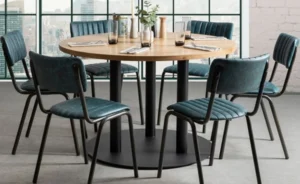
A single central table base is often ideal for smaller tables.
One pedestal base can work particularly well with:
Round tabletops
Small square tabletops
Compact dining tables
Café tables
Bistro tables
Coffee and occasional tables
A central base can also provide excellent legroom because there are no corner legs occupying the space underneath the tabletop.
For round tables, a central pedestal is particularly popular because it allows chairs to be positioned around the entire perimeter of the table.
However, the size and weight of the tabletop must always be considered. A single base may not be suitable for a large or particularly heavy tabletop.
When Do I Need Two Table Bases?
For many rectangular dining tables, two bases are the most common configuration.
Using two bases distributes the weight of the tabletop more evenly and provides support towards each end of the table.
Two bases can be suitable for:
Rectangular dining tables
Large desks
Meeting tables
Boardroom tables
Worktops and countertops
Bespoke furniture projects
Positioning is important when using two bases. They should generally be positioned far enough apart to provide good support while still allowing comfortable seating.

The exact position will depend on the dimensions and design of the bases, as well as the size and weight of the tabletop.
When Might I Need Three or More Bases?
Very large tabletops may require additional support.
Long dining tables, conference tables and commercial furniture can place considerable load on the supporting structure. In these situations, three or more bases may be appropriate, depending on the tabletop construction and the manufacturer’s recommendations.
Additional bases may also be required when using particularly heavy materials such as:
Thick solid timber
Stone
Marble
Porcelain
Ceramic
Other heavyweight surfaces
For large or unusually heavy tabletops, don’t simply add more bases without considering how the support will interact with the tabletop. A specialist frame or alternative support system may be more appropriate.
Does the Shape of My Tabletop Matter?
Yes. The shape of your tabletop is an important consideration when deciding how many bases you need.
Round Tables
Round tables often work particularly well with one central pedestal base.
The central position provides balanced support while keeping the area around the edge of the table clear for chairs and legs.
Larger round tabletops may require a larger pedestal or a different support configuration.
Square Tables
Smaller square tables can often use a single central base.
As the tabletop becomes larger or heavier, you may need a larger pedestal or an alternative multi-base arrangement.
Rectangular Tables
Rectangular tabletops commonly use two bases, particularly for dining and meeting tables.
For longer tabletops, additional support may be required depending on the tabletop material, thickness and weight.
Oval Tables
Oval tabletops can work with central pedestal bases, twin bases or other configurations depending on their size and construction.
Because there are no sharp corners, it’s particularly important to consider where the bases will sit in relation to the seating positions.
How Does Tabletop Weight Affect the Number of Bases?
Tabletop weight is one of the most important factors to consider.
A large, lightweight tabletop may have different requirements from a smaller but extremely heavy stone or solid-wood top.
Before choosing your bases, find out:
1. How much does the tabletop weigh?
2. What are its length, width and thickness?
3. What is it made from?
4. What is the recommended load capacity of the base?
5. How many bases does the manufacturer recommend for your tabletop size?
If the tabletop is particularly heavy, always check its compatibility with the chosen bases before purchasing.
How Far Apart Should Two Table Bases Be?
When using two bases, positioning is just as important as the number of bases.
The bases need to provide adequate support while leaving enough room for chairs and diners.
As a general principle, placing the bases towards the outer areas of the tabletop can provide good weight distribution and help reduce movement. However, they shouldn’t be positioned so close to the edge that they interfere with seating or become visually unbalanced.
The ideal position will depend on the base design, tabletop dimensions and fixing points.
Always check the manufacturer’s recommended positioning where available.
What About Legroom?
More bases don’t necessarily mean a better table.
Every additional base or support can potentially reduce the available legroom underneath the tabletop. This is particularly important for dining tables, where people need to sit comfortably for extended periods.
A central pedestal can be an excellent option where maximising legroom is a priority.
For rectangular tables, two appropriately positioned pedestal bases can provide a useful balance between support and seating space.
Before deciding how many bases to use, consider where the chairs will be positioned and whether the bases could interfere with people’s legs.
Do I Need More Bases for a Heavy Tabletop?
Not necessarily.
If you’re using a particularly heavy tabletop, the answer isn’t always to add more individual bases. The overall design of the support system needs to be considered.
For example, a heavy stone or solid-wood tabletop may require:
A larger pedestal
Two heavy-duty bases
Multiple bases
A reinforced frame
Specialist mounting hardware
The construction and strength of the tabletop should also be taken into account.
If you’re unsure, provide the base supplier with the tabletop’s dimensions, material and approximate weight. They should be able to advise on the most appropriate configuration.
Can I Use More Bases for a Design Feature?
Absolutely.
The number of bases isn’t purely a structural decision. The base can be an important part of the table’s design.
For example, multiple slim bases can create a contemporary architectural appearance, while two substantial pedestal bases can give a large dining table a strong, substantial look.
If appearance is important, consider how the bases will look from different angles and how they’ll interact with the chairs.
What About Table Bases for Commercial Tables?
Commercial tables often have different requirements from domestic dining tables.
Restaurants, cafés, bars, hotels, offices and other commercial environments may experience much heavier and more frequent use.
For commercial projects, consider:
Tabletop weight
Frequency of use
Number of diners
Floor surface
Stability
Base material
Available legroom
Ease of cleaning
Indoor or outdoor use
For larger commercial tables, a more substantial support system may be appropriate.
A Simple Rule to Remember
When deciding how many table bases you need, start with these four questions:
How big is the tabletop?
How heavy is it?
What shape is it?
How will the table be used?
From there, you can determine whether one central base, two bases or a larger support system is appropriate.
Quick Guide
Small round or square tabletop → Usually 1 central base
Medium rectangular tabletop → Usually 2 bases
Large rectangular tabletop → Usually 2 or more bases
Very large or heavy tabletop → Specialist advice recommended
These are general guidelines only. Always check the recommended tabletop size and weight capacity for the specific table base you are considering.
Need Help Choosing Your Table Bases?
If you’re unsure how many bases you need, we’re here to help.
Simply provide us with the length, width and thickness of your tabletop, along with its material and approximate weight, and we can help you determine the most suitable table-base configuration.
Whether you’re building a dining table, meeting table, restaurant table or completely bespoke piece of furniture, choosing the right number of bases will help ensure your finished table is stable, comfortable and built to last.