
Table Base Materials Guide
The material of a table base affects much more than its appearance. It can influence the weight, stability, durability, maintenance requirements and suitability of the finished table for different environments.
From traditional cast iron and steel to natural wood, lightweight aluminium and decorative brass, different materials offer different benefits.
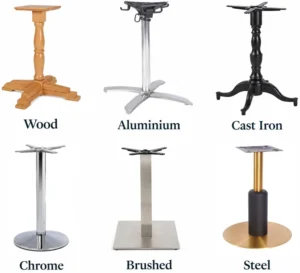
This guide explains the key differences between the table base materials we offer, helping you choose the right option for your project.
Cast Iron Table Bases
Cast iron is a popular choice for commercial and traditional table bases, particularly where a substantial and robust appearance is required.
Appearance
Cast iron has a strong, solid appearance that works particularly well with traditional, industrial and heritage-inspired interiors.
Weight
Cast iron is considerably heavier than materials such as aluminium. This additional weight can help provide a substantial and stable base, particularly for commercial tables.
Durability
Cast iron is a robust material that is well suited to demanding environments, including restaurants, cafés, pubs and other commercial settings.
Maintenance
Maintenance requirements depend on the finish. Regular cleaning with suitable products will help keep the base looking its best.
Where cast iron is exposed to moisture, care should be taken to ensure the appropriate finish and protection are used.
Indoor Suitability
Cast iron is well suited to indoor applications including restaurants, pubs, cafés, hotels, offices and dining areas.
Outdoor Suitability
Cast iron can be suitable for certain outdoor applications when it has an appropriate protective finish and is specifically designed for outdoor use.
Always check the product specification before using a cast iron base outside.
Steel Table Bases
Steel is a versatile material used across a wide range of table base designs.
Appearance
Steel can have a clean, modern appearance and is available in a variety of finishes. Depending on the design and finish, steel bases can work well in contemporary, industrial, commercial and traditional interiors.
Weight
Steel is generally lighter than cast iron but heavier than aluminium, providing a useful balance between strength and manageable weight.
Durability
Steel is well suited to frequent-use environments and can provide excellent durability when correctly finished and maintained.
Maintenance
Maintenance depends on the finish applied to the steel. The surface should be cleaned using appropriate products and kept free from excessive moisture where the finish is not intended for wet environments.
Indoor Suitability
Steel is suitable for restaurants, cafés, pubs, bars, hotels, offices, meeting rooms and dining areas.
Outdoor Suitability
Some steel table bases are suitable for outdoor use when manufactured and finished specifically for exterior environments.
Standard indoor steel should not automatically be assumed to be suitable for outdoor use.
Stainless / Brushed Steel Table Bases
Stainless steel is particularly useful where a clean, contemporary appearance and resistance to corrosion are important.
A brushed finish gives stainless steel a softer, less reflective appearance than a highly polished surface.
Appearance
Brushed stainless steel has a modern and understated appearance. It works well with contemporary interiors and a wide range of tabletop materials.
Weight
Stainless steel is generally heavier than aluminium but can be lighter and easier to handle than substantial cast iron bases, depending on the design.
Durability
Stainless steel offers excellent durability and corrosion resistance, making it a popular choice for demanding commercial applications.
Maintenance
Stainless steel is relatively straightforward to maintain. Regular cleaning helps remove fingerprints, marks and general dirt.
When cleaning brushed stainless steel, wiping with the grain of the finish can help maintain its appearance. Avoid abrasive cleaning methods that could damage the brushed surface.
Indoor Suitability
Stainless steel is well suited to restaurants, commercial kitchens, cafés, bars, hotels, offices and modern dining areas.
Outdoor Suitability
Stainless steel can be suitable for outdoor applications, but the specific grade, finish and product design should be checked before use outside.
Chrome Table Bases
Chrome finishes provide a bright, reflective appearance and are often selected when appearance is an important part of the overall furniture design.
Appearance
Chrome has a highly polished, reflective finish that creates a clean and contemporary look.
Weight
The weight of a chrome table base depends largely on the material underneath the chrome finish. Chrome is a finish rather than the structural material itself.
For this reason, the weight should be checked against the specific product.
Durability
Chrome can provide a durable decorative finish when properly cared for. However, the finish can be affected by scratches, impacts and unsuitable cleaning products.
Maintenance
Chrome is relatively easy to wipe clean.
To maintain its appearance:
Use a soft cloth
Avoid abrasive cleaners
Remove spills promptly
Avoid harsh chemicals
Take care not to scratch the surface
Indoor Suitability
Chrome is particularly well suited to restaurants, cafés, bars, hotels, offices and contemporary dining areas.
Outdoor Suitability
Chrome finishes are generally better suited to indoor environments unless the specific product has been designed and specified for outdoor use.
Aluminium Table Bases
Aluminium is a lightweight material that can be particularly useful where tables need to be moved regularly.
Appearance
Aluminium can have a clean, contemporary appearance and can be finished in a variety of ways.
Weight
One of aluminium’s key advantages is its relatively low weight.
This can make aluminium bases easier to handle, move and rearrange than heavier materials such as cast iron.
Durability
Aluminium provides good durability for many table applications and has natural corrosion resistance. The overall durability will also depend on the design and finish of the individual base.
Maintenance
Aluminium is generally straightforward to clean. Regular cleaning with an appropriate non-abrasive product can help maintain the finish.
Indoor Suitability
Aluminium is suitable for cafés, restaurants, hotels, bars, offices and dining areas.
Outdoor Suitability
Aluminium is particularly useful for outdoor furniture because of its corrosion resistance and relatively low weight.
However, the individual base should still be checked to confirm that its specific finish and construction are suitable for outdoor use.
Brass Table Bases
Brass is often selected for its distinctive decorative appearance. It can add warmth and character to a table design and is particularly effective where the base is intended to be a visible feature.
Appearance
Brass has a warm, sophisticated appearance that can work particularly well with traditional, luxury and contemporary interiors.
It can complement a wide range of tabletop materials, including timber, stone and glass.
Weight
The weight of a brass table base depends on the design and construction. Brass is generally a substantial metal, so the individual product specification should be checked when considering handling and installation.
Durability
Brass is a durable material that can be suitable for commercial and domestic furniture applications.
Its appearance may change over time depending on the finish and exposure to the environment.
Maintenance
Maintenance requirements depend on the type of brass finish.
Some finishes are designed to retain their appearance with minimal maintenance, while untreated or naturally ageing brass may develop a patina over time.
Always follow the recommended cleaning method for the specific finish.
Indoor Suitability
Brass is particularly well suited to restaurants, hotels, bars, cafés, offices, reception areas and high-end residential interiors.
Outdoor Suitability
Brass can be used in some outdoor applications, but suitability depends heavily on the specific finish, product and environment.
Always check that the particular brass base is specified for outdoor use before installation.
Wooden Table Bases
Wooden table bases offer a natural alternative to metal bases and can bring warmth, texture and character to a finished table.
They are particularly suited to dining tables, hospitality furniture and interiors where natural materials are an important part of the design.
Appearance
Wood has a warm, natural appearance that works well with both traditional and contemporary interiors.
Wooden bases can complement timber tabletops particularly well, but they can also create an attractive contrast with materials such as stone, glass or laminate.
Different timber species, stains, colours and finishes can create very different looks, making wood a versatile option for interior furniture.
Weight
The weight of a wooden table base varies depending on the type of timber, construction and size of the base.
Wood can provide a substantial feel without necessarily being as heavy as a cast iron base. The weight of the individual product should always be checked when considering handling and installation.
Durability
A well-constructed and appropriately finished wooden table base can provide excellent durability for domestic and commercial indoor applications.
The expected level of use should be considered when choosing the timber and finish. Areas with heavy daily use may require a particularly durable protective finish.
Maintenance
Wooden table bases are generally straightforward to maintain, but they require slightly different care from metal bases.
Regular dusting and cleaning with a suitable product will help maintain the finish. Avoid excessive moisture and harsh or abrasive cleaning products that could damage the surface.
Spills should be cleaned promptly, particularly on finishes that are not designed for prolonged exposure to moisture.
Indoor Suitability
Wooden table bases are particularly well suited to indoor applications including:
Restaurants
Cafés
Hotels
Offices
Dining rooms
Reception areas
Residential dining areas
They can be particularly effective where a warm, natural or traditional appearance is required.
Outdoor Suitability
Standard wooden table bases should generally be treated as indoor furniture unless the specific timber, construction and finish have been designed for outdoor use.
Outdoor conditions can expose wood to moisture, temperature changes and UV exposure, which can affect both its appearance and performance.
Always check the individual product specification before using a wooden table base outdoors.
Comparing Table Base Materials
| Material | Appearance | Weight | Durability | Maintenance | Indoor | Outdoor* |
|---|---|---|---|---|---|---|
| Cast Iron | Traditional / industrial | Heavy | Excellent | Low–moderate | ✓ | Selected products |
| Steel | Modern / versatile | Medium | High | Low–moderate | ✓ | Selected products |
| Stainless / Brushed Steel | Contemporary / clean | Medium | Excellent | Low | ✓ | Selected products |
| Chrome | Bright / reflective | Depends on base material | Good | Low–moderate | ✓ | Generally limited |
| Aluminium | Modern / lightweight | Light | Good | Low | ✓ | Selected products |
| Brass | Warm / decorative | Medium–heavy | High | Finish dependent | ✓ | Selected products |
| Wood | Natural / warm | Light–medium* | High* | Moderate | ✓ | Selected products |
*Weight, durability and outdoor suitability for wooden bases depend on the timber, construction and finish.
*Outdoor suitability depends on the specific product, material grade, protective finish and intended environment. Always check the individual product specification before using a table base outdoors.
Which Table Base Material Should You Choose?
There is no single material that suits every application. The right choice depends on the environment, desired appearance, handling requirements and expected level of use.
Choose Cast Iron When:
You want a substantial, traditional appearance
A heavier base is suitable
The table will be used in a demanding commercial environment
Stability and a solid feel are important
Choose Steel When:
You want a versatile commercial solution
A balance between strength and weight is important
You want a wide choice of styles and finishes
The table will be used regularly
Choose Stainless / Brushed Steel When:
You want a clean, contemporary appearance
Corrosion resistance is important
The table will be used in hospitality or commercial environments
Easy routine cleaning is important
Choose Chrome When:
You want a bright, polished appearance
The base is part of a contemporary interior
A decorative finish is important
The table will primarily be used indoors
Choose Aluminium When:
Low weight is important
Tables need to be moved or rearranged
Outdoor suitability is required on a suitable product
You want a modern appearance
Choose Brass When:
The table base is intended to be a design feature
You want a warm, decorative finish
The furniture is being used in a premium or hospitality setting
The appearance of the finish is an important consideration
Choose Wood When:
You want a natural, warm appearance
The base needs to complement a timber tabletop
You are creating a traditional or contemporary interior
The table will primarily be used indoors
A non-metal table base is preferred
Table Base Material Checklist
Before choosing your table base material, consider:
✓ Desired appearance and finish
✓ Tabletop material and style
✓ Base weight
✓ Required stability
✓ Expected frequency of use
✓ Cleaning and maintenance requirements
✓ Indoor or outdoor application
✓ Exposure to moisture or weather
✓ How often the table needs to be moved
✓ The specific product’s material and finish specification
Find the Right Table Base Material
The material you choose can have a significant impact on the finished table, from its visual style and weight to durability and maintenance.
Whether you’re looking for the traditional solidity of cast iron, the versatility of steel, the clean finish of stainless steel, the reflective appearance of chrome, the lightweight benefits of aluminium, the warm character of brass or the natural appeal of wood, choosing the right material starts with considering how and where the table will be used.
For outdoor applications in particular, always check the individual product specification to confirm that the base, material and finish are suitable for the intended environment.